Using a household composter is here to stay, but luckily a frozen composter is not! Sulana® compost heater helps you through the cold months!
The principle of a composter is simple and there is already a wide range of composters to choose from, with varying sizes, models and features. These composters all share one key detail: come autumn and winter, the composting micro organisms slow down and ultimately stop working entirely: the material in the composter has frozen solid!
A composter requires a relatively high temperature in order to work efficiently (40-80˚C). Even in lower, sub 50 degree temperatures some of the material decomposes and produces compost, but not all of the organic waste burns efficiently enough.
Weeds, diseases and pests do not decompose in a low-temperature composter. When you take out and spread the compost into your garden, these unwanted squatters get a strong boost in the nutrient-rich compost soil. In autumn and winter months, high enough temperatures are only reached in the very middle of the composter. In the sides the temperatures stay low, even if the composter is insulated. If you use a composter to get rid of weeds, plant diseases and pest-ridden veggies or fruits, you must simply accept a fact: not everything you put into the compost bin is going to decompose.
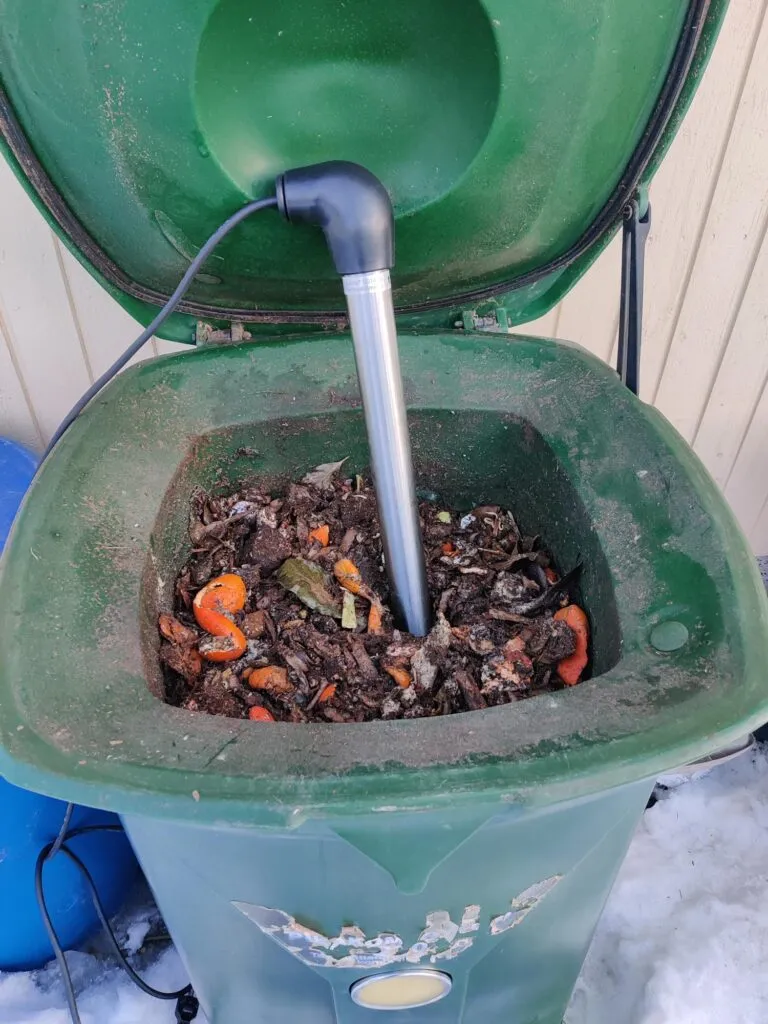
Sulana® SS140W ready for action.
Products
We manufacture different kinds of Sulana® composter heaters:
Pipe heaters
Either a 60 or 90 cm long metal pipe with a heater element surrounded by quartz crystals inside.
Spiral heaters
A spiral-shaped heater element with a total length of 2 meters (180W) or 4 meters (360W).
Disk heaters
A thin disk that is installed to the bottom of the compost bin with a heating power of either 90W or 150W.
You can find all our products and their details here.
Some numbers
The Sulana® composter heaters operate with 230 VAC voltage. The heater is safe to use since it operates through a protective earth (PE) connection. We also recommend you to use an RCD socket.
Sulana composter heaters are highly energy efficient. Our most powerful heater operates at 180 W and this power is only used when the temperature is under the limit controlled by a thermostat. The heater warms up the compost until the temperature reaches 50˚C. After this the heater element is turned off and electricity usage goes to zero. When the micro organisms in the composter are active, they maintain a proper temperature. Power is thus only used when it gets really cold! (Given that new waste is added to the bin periodically.)
Energy usage calculation
Let us use a 180 W spiral heater as an example. We have calculated that the heater only uses 10-15€ of electricity during a winter (assuming 0,24 €/kWh). The calculation used a customer situation from winter 2026 in Jyväskylä, Finland: a 220-litre insulated composter with new waste added 1-2 times per week.
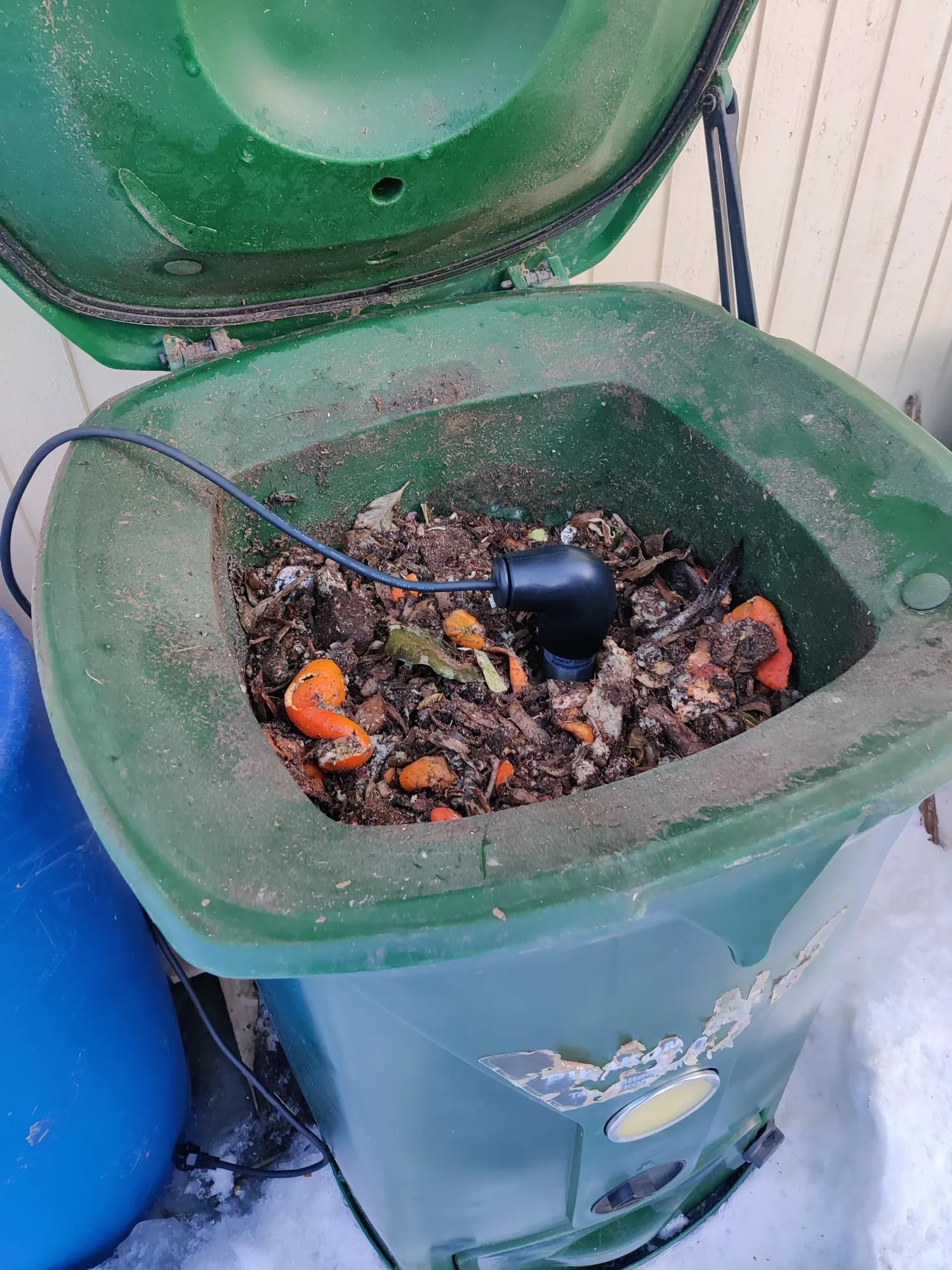
Sulana® SS140W in use
Using composting accelerator
When a composter freezes and you are using a heater to reactivate it, it is possible to use composting accelerator as well. The accelerator helps especially in mid winter and when you are establishing a new composter. It is not necessary to use accelerator products but they can help when waking up a frozen composter in the winter.
Composter placement
Often a new composter is placed into a location in the backyard where it is out of sight. This might mean in the very back of the yard next to a fence or behind a garage. While these might sound like good ideas, you should remember that an efficient composter should be used and fed weekly. For this reason the location should be easily accessible, in any weather.
Another thing to think about are the liquids formed inside the composter. The bin should be placed 10-20 cm above ground onto a slab or tile of some sort. This way the liquids can be disposed of easily into a container below the bin and you can empty the container more effortlessly. In the winter snow creates its own challenges and a simple shelter and a roof on top of the bin is the best solution.
To achieve optimal conditions for your composter, aim to place it into a partially sunny location. Spring sun is enough to warm up the bin but very direct sunlight in the summer can hurt the structure of the composter. You can also use simple cardboard or plywood contraptions to shade the bin from the hot sun. These kind of days are luckily not that common here in the Nordics… 😉